

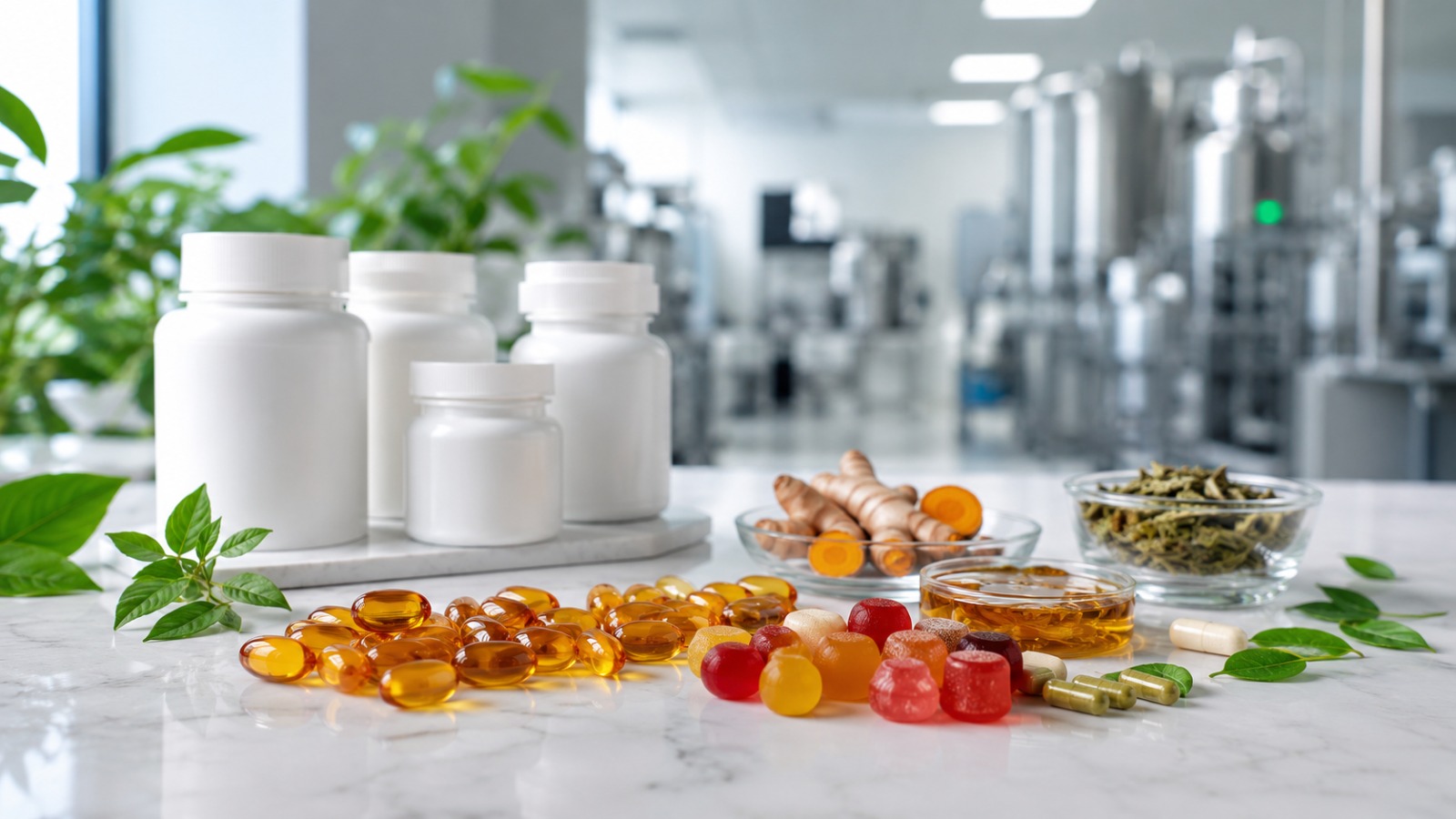
The global wellness boom has made the supplement industry one of the most attractive spaces for entrepreneurs, e-commerce sellers, and healthcare professionals. Consumers are actively seeking gummies, softgels, serums, and functional nutrition products — and the vast majority of successful supplement brands never build their own factory. Instead, they partner with an experienced contract manufacturer and focus their energy on branding, marketing, and sales.
If you've been wondering how to start a supplement brand, this guide walks you through the entire journey: picking your niche, choosing between private label and custom formulation, understanding real startup costs, navigating compliance, and selecting the right manufacturing partner.
Step 1: Choose Your Niche and Product Format
The biggest mistake new supplement founders make is trying to be everything to everyone. Winning brands in 2026 are specific. Before you contact a manufacturer, define:
- Your target customer — fitness enthusiasts, women's wellness, seniors, pet owners, or beauty-from-within buyers
- The problem you're solving — sleep, immunity, joint health, skin radiance, digestion, or energy
- The delivery format your audience prefers
Format matters more than most founders realize. Softgels remain the gold standard for oil-based actives like omega-3s, curcumin, and fat-soluble vitamins because of superior bioavailability. Gummies dominate the adult wellness market thanks to taste and convenience. Serums and topicals are surging in the beauty-nutrition crossover space. A manufacturer that produces multiple formats under one roof — softgels, gummies, serums, extracts, and even veterinary nutraceuticals — gives you room to expand your line later without switching partners.
Step 2: Decide Between Private Label and Custom Formulation
This single decision shapes your budget, timeline, and brand defensibility.
Private label (stock formulas): You choose from a manufacturer's proven, ready-made formulations and apply your own branding. This is the fastest and most affordable route to market — ideal for first-time founders and Amazon sellers who want to validate demand before investing heavily. Lead times are shorter, minimum order quantities are lower, and the formula has already passed stability and quality testing.
Custom formulation: You work with the manufacturer's R&D team to create a proprietary blend unique to your brand. This costs more upfront and takes longer, but it gives you a differentiated product that competitors cannot copy from a catalog. Custom formulation makes sense once you've proven demand or when your brand strategy depends on a unique ingredient story.
The smart play for most new brands: launch with a private label product at the lowest possible MOQ, validate the market, then reinvest profits into a custom formulation as your hero product.
Step 3: Understand the Real Cost to Start a Supplement Business
Startup costs vary widely depending on your approach, but here is a realistic breakdown for 2026:
Private label route ($5,000–$15,000 total): Stock formula setup and branding typically runs $1,000–$3,000, plus your first inventory order based on the manufacturer's MOQ, label design, and basic compliance review. This is the leanest path to a market-ready product.
Custom formulation route ($25,000+): Expect $5,000–$15,000 for formulation development alone, covering R&D, ingredient sourcing, pilot batches, and stability testing — before your first production run.
Costs every founder should budget for regardless of route:
- Third-party testing for potency and purity (charged per batch)
- Packaging and label design that meets FDA labeling requirements
- Business registration and insurance
- Marketing — the expense most founders underestimate. As a rule of thumb, plan to spend at least as much on launch marketing as on your first inventory order.
Your MOQ (minimum order quantity) is the biggest variable in your startup budget. MOQs across the industry range from roughly 500 bottles for private label stock formulas to tens of thousands of units at large-scale facilities. Ask potential manufacturers about their MOQ early — a partner that supports growing brands with accessible minimums can dramatically lower your barrier to entry.
Step 4: Get Compliance Right From Day One
The supplement industry is regulated, and cutting corners here can end a brand overnight. Your manufacturing partner should carry the certifications that do the heavy lifting for you:
- GMP certification ensures every batch is produced under Good Manufacturing Practices with documented quality control.
- FDA registration is essential if you plan to sell in the US market.
- WHO-GMP and ISO 9001:2015 signal internationally audited quality systems — critical if you plan to sell across multiple countries.
- FSSAI licensing covers the Indian market.
Beyond facility certifications, your product labels must comply with FDA labeling requirements, including accurate supplement facts panels, permissible structure-function claims, and required disclaimers. Marketplaces like Amazon now also mandate third-party testing documentation, so choose a manufacturer that provides certificates of analysis (COAs) with every batch.
Step 5: Choose the Right Contract Manufacturing Partner
Your manufacturer is not a vendor — they're the foundation of your brand's quality reputation. Evaluate potential partners on:
- Experience and track record. A manufacturer with decades in the industry has survived regulatory changes, supply chain disruptions, and evolving quality standards. Longevity is a proxy for reliability.
- Format range. Can they produce softgels, gummies, serums, oils, and extracts? A multi-format partner lets you extend your product line without re-vetting a new facility.
- Certifications you can verify. GMP, FDA registration, ISO 9001:2015, WHO-GMP.
- End-to-end services. The best partners handle formulation, raw material sourcing, manufacturing, testing, packaging, and export documentation — a true turnkey solution, especially valuable for e-commerce and Amazon sellers.
- Global reach with accessible service. If you plan to sell internationally, a manufacturer with export experience (FIEO certification is a strong signal) will save you from costly documentation mistakes.
Step 6: Launch, Learn, and Scale
Once your first production run ships, your job shifts to distribution and feedback. Start focused — one or two SKUs on your own website and Amazon — and let customer reviews guide your next move. When a product proves itself, that's your signal to negotiate larger production runs (which lower your per-unit cost), invest in custom formulation, or expand into adjacent formats like gummies or topical serums.
Brands that scale successfully treat their manufacturer as a growth partner: sharing sales forecasts, planning inventory ahead of demand spikes, and co-developing new products based on market trends.
Frequently Asked Questions
How much does it cost to start a supplement brand?
A lean private label launch can start around $5,000–$15,000, while a custom-formulated line typically requires $25,000 or more. Your biggest variables are formulation type, MOQ, packaging, and marketing budget.
Do I need my own manufacturing facility?
No — over 75% of supplement brands outsource production to contract manufacturers. This lets you launch without the multi-million-dollar investment of building an FDA-compliant facility.
How long does it take to launch a supplement product?
Private label products using stock formulas can be market-ready in a matter of weeks. Custom formulations typically take several months, including R&D, pilot batches, and stability testing.
What is the most profitable supplement format?
Softgels and gummies lead the market. Softgels command premium pricing for oil-based actives, while gummies enjoy the fastest category growth and strong repeat-purchase rates.
Why choose a manufacturer in India?
India-based GMP and WHO-GMP certified manufacturers offer world-class quality at significantly better production economics, with deep expertise in herbal extracts and nutraceutical ingredients — while FDA registration ensures products meet US market standards.
Ready to Launch Your Supplement Brand?
With over 30 years of manufacturing excellence, Herbinn Wellness has helped brands worldwide bring their vision to life — from softgels and gummies to serums, extracts, and veterinary nutraceuticals. Our GMP certified, FDA compliant facilities offer turnkey private label and custom formulation services designed for growing brands, wellness startups, and e-commerce sellers.